
If dental implants are “just like real teeth,” why don’t most of them feel like real teeth when a patient bites, chews, or senses pressure?
In U.S. dentistry, the answer often comes back to biology. Traditional systems rely on titanium posts that lock to bone through osseointegration, creating durable anchorage. Yet they bypass the periodontal ligament—the soft-tissue interface that naturally carries nerves and helps the brain track force, position, and texture during function. That gap is why what is the new method for dental implants? is becoming a more clinical question than a marketing phrase.
Today’s dental implant innovations point in two directions. First is better delivery: digitally planned, minimally invasive placement that improves fit, reduces surprises, and supports more predictable outcomes. Many modern dental implant solutions now begin with advanced imaging, guided surgery, and CAD/CAM workflows rather than “freehand” drilling and long trial-and-error appointments. For a practical overview of standard implant components and timelines, clinicians often reference resources like denture implant basics.
The second direction is more disruptive: biologically integrated designs that try to restore function, not only structure. A Tufts University team reported a prototype implant concept that aims to reconnect local nerves so an implant can “talk” to the brain. Their approach uses a biodegradable coating loaded with stem cells and growth proteins, intended to support nerve tissue regeneration as healing progresses. The coating also includes tiny, rubbery nanofibers that expand in place, helping the implant seat snugly while preserving existing nerve endings during a less invasive placement.
In a rodent model, the implants remained stable at six weeks with no reported inflammation or rejection, and imaging showed a distinct space between implant and bone—consistent with soft-tissue integration rather than classic bone fusion. These findings are early-stage, but they sharpen what is the new method for dental implants? into a measurable goal: sensory feedback that more closely matches a natural tooth. The study details are summarized in Tufts University’s report, with preclinical work still needed to confirm brain activity changes.
For clinicians, the takeaway is balance. Dental implant innovations in daily practice are already improving planning and placement, while sensory, nerve-integrating implants remain preclinical and not yet a standard of care. Still, both tracks are shaping modern dental implant solutions in the United States—one through better precision, the other through better biology.
Key Takeaways
- What is the new method for dental implants? It is a shift from purely mechanical anchorage toward digitally planned care and biologically integrated designs.
- Classic osseointegration offers strong stability, but it bypasses the periodontal soft-tissue interface that supports natural tooth sensation.
- Dental implant innovations now include minimally invasive, technology-enabled workflows that improve predictability in routine cases.
- Tufts University described a prototype implant coating designed to support nerve regeneration and soft-tissue integration.
- In rodents, implants were stable at six weeks with no reported inflammation or rejection, and imaging suggested soft-tissue integration.
- Modern dental implant solutions in clinics are advancing quickly, while sensory-feedback implants remain investigational and require more study.
What is the new method for dental implants?

In many U.S. practices, the new method for dental implants is a digitally driven workflow. It combines 3D imaging, virtual planning, guided placement, and digitally designed prosthetics. This creates a single path of care.
This approach helps clinicians make better decisions before surgery. For patients, it means fewer surprises in fit and function. This is different from older, analog steps.
How CBCT and 3D X-rays upgrade diagnosis and implant planning
CBCT is key in the latest dental implant techniques. It shows bone volume, angle, and limits in three dimensions. This gives more detail than 2D films.
In full-arch planning, like Teeth-in-a-Day, CBCT is very useful. It helps plan implant placement and space for restorations. Digital tools like 3D guided implant planning use the scan for a virtual setup. This shows implant depth, diameter, and path before surgery.
Computer-guided implant surgery for precision and predictability
Computer-guided surgery uses a virtual plan in the operatory. It guides a template and a drilling sequence. This aims to reduce variation and improve consistency.
Guidance is tied to efficiency goals in immediate-load workflows. Placement accuracy is key for day-of temporary teeth. In Teeth-in-a-Day, computer-guided planning supports predictable positioning. It keeps tissue management controlled.
| Digital workflow step | What the clinician evaluates | Clinical value in full-arch and single-unit cases |
|---|---|---|
| CBCT + digital scans | Bone density trends, ridge width, sinus/IAN location, restorative space | Improves implant site selection and helps reduce anatomic risk during osteotomy |
| Virtual implant planning | Implant diameter/length, angulation, emergence profile, prosthetic screw access | Aligns surgical placement with restorative contours and cleansability targets |
| Guided placement | Depth control, trajectory control, drill protocol adherence | Supports consistent execution and may reduce chairside corrections to fit |
| Immediate provisionalization | Occlusal scheme, passive fit checks, soft-tissue support | Enables temporary teeth the same day when primary stability and case factors allow |
| Final CAD/CAM prosthetics | Occlusion refinement, material selection, contours for hygiene access | Delivers a more repeatable fit and finish after healing and tissue maturation |
3D printing and CAD/CAM for patient-specific modern dental implant solutions
CAD/CAM supports patient-specific prosthetics. It uses digital design to refine tooth position, contours, and occlusion before milling or printing. This improves comfort and reduces the need for remakes.
In immediate-load protocols, the timeline includes temporary teeth on the day of implant placement. Then, there’s a healing phase followed by a definitive prosthesis. This pacing is key in modern implant workflows and highlights the importance of planning accuracy.
While digital systems optimize placement and fit, biologic concepts are also explored. Research groups, including Tufts University, have discussed coatings for nerve-related healing. These ideas are still preclinical and not used in U.S. offices today.
Dental implant innovations shaping the latest dental implant techniques in the United States
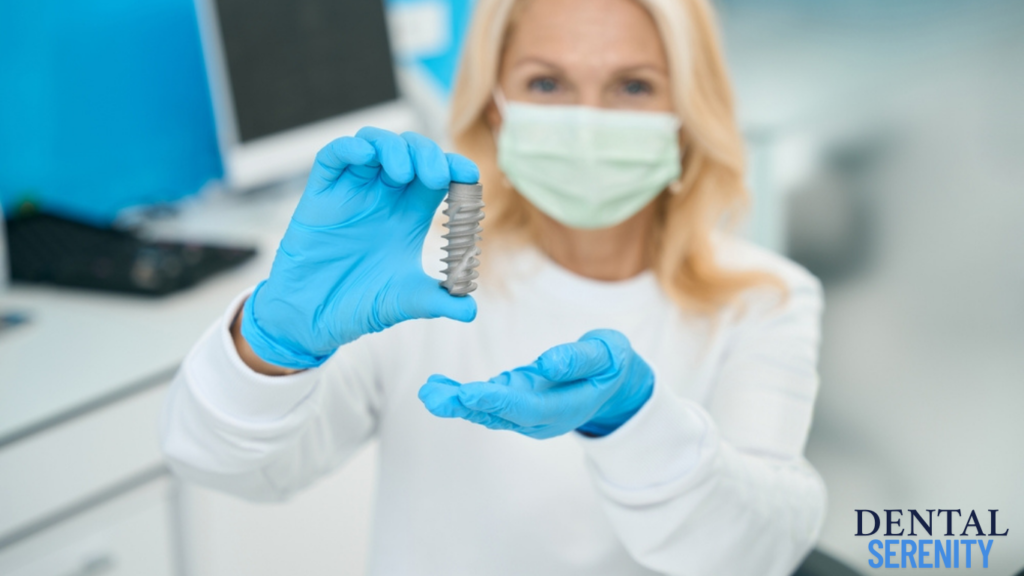
In the U.S., dental implant advancements aim for faster treatment and safer procedures. Many dental offices now use advanced technology like CBCT scans, guided surgery, and immediate tooth replacements in one visit.
When choosing dental implants, it’s important to know what’s common and what’s still being tested. This helps dentists make the best choice for their patients.
All-on-4 as an updated dental implant option for full-arch restoration
All-on-4 implants are great for replacing many teeth at once. They use four implants to support a bridge that can replace up to 14 teeth. This method is appealing because it can be done in just one visit, with a temporary tooth set the same day.
These implants are angled to avoid important structures like the sinus or nerve canal. This makes the procedure safer and more effective. For more details, check out the All-on-4 immediate-load workflow.
Advanced dental implant technology in materials: titanium, zirconia, and Ti-Zr alloys
Choosing the right material for dental implants is crucial. Titanium is the most common choice because it’s biocompatible and reliable. Zirconia is preferred for its metal-free and aesthetic benefits.
Titanium-zirconium alloys are strong and durable, making them suitable for tight spaces. However, dentists must consider each patient’s unique needs, such as bone quality and dental function.
Revolutionary dental implant advancements in surfaces and coatings
Improving how implants bond with bone is a key area of research. New surfaces and coatings aim to speed up healing and reduce infection risk. These advancements could lead to better implant success rates.
Researchers are also exploring ways to fight bacteria around implants. This includes using peptides, calcium phosphate, or silver to keep implants clean. For more on these advancements, see this open-access review on emerging implant materials and coatings.
Cutting-edge dental implant procedures: smart implants, AI, and robotics (what’s real vs. what’s emerging)
In the U.S., AI is mostly used for planning and reviewing images, not for surgery. Navigation systems and guided kits are common tools. Robotics is used in some places for precise implant placement.
Smart implants with sensors are an exciting area of research. While the idea is promising, their use is still in the early stages. These technologies raise important questions about their practical application and how they will change dental care.
| Technique or technology | Typical U.S. use today | Primary clinical value | Key limits to watch |
|---|---|---|---|
| All-on-4 immediate-load full-arch | Common in referral-based implant centers and many GP/specialty practices | Fewer implants per arch, graft-avoidance strategies, faster provisional function | Case selection for stability, hygiene access, prosthetic complications over time |
| Titanium implants | Standard of care across most indications | Reliable osseointegration and broad component ecosystems | Esthetic constraints in thin biotype; metal sensitivity concerns in select patients |
| Zirconia implants | Selective use, often esthetic or metal-free preference cases | Tooth-colored profile and favorable soft-tissue appearance | Brittleness under high occlusal load; limited long-term datasets in some designs |
| Ti-Zr narrow-diameter implants | Growing use for space-limited ridges | Higher strength with smaller diameter options | Need for more long-term outcomes in broader patient cohorts |
| Bioactive and antimicrobial surface/coating concepts | Mixed: some surface treatments are routine; novel coatings are still emerging | Early healing support and potential bacterial control around the collar | Durability, reproducibility, and controlled release performance over time |
| AI planning, navigation, and robotics support | AI planning is common; robotics is limited to select sites | Consistency in implant positioning and restorative-driven planning | Cost, training curve, workflow integration, and regulatory boundaries |
| Smart implants with sensors | Investigational and not routine | Potential monitoring of stability, load, and early inflammation signals | Data governance, validation standards, and actionable clinical thresholds |
Conclusion
In the United States, a new method in dentistry is emerging. It uses digital tools for quicker and more precise dental implants. This method ensures implants fit well and need fewer adjustments during the process.
It also makes treatment faster and keeps the implant in the right place for the final tooth. This is especially true for options like Teeth-in-a-Day and All-on-4, where patients might get temporary teeth the same day.
By choosing the right angle for implants, doctors can sometimes avoid the need for bone grafts. A detailed look at these advancements is found in advances in dental implant technology. This includes 3D printing and new materials that help with looks and how well the implant integrates with bone.
It’s important to know what’s standard now and what’s still being tested. Tools like imaging-guided planning and CAD/CAM manufacturing are now common. They help make implants more predictable and control the timeline.
On the other hand, new ideas like a Tufts University prototype are still in the early stages. It has a special coating and structure to help with healing. But, it’s still being tested in humans.
Choosing the right dental implant depends on the patient’s bone health, overall health, and what they want for their teeth. Options like All-on-4 work well for some, while others might need more implants. As more research comes in, doctors can use these techniques with confidence.
What is the Tufts University “smart” implant research, and why is it considered an emerging dental implant innovation?
Tufts University is working on implants that act like real teeth. These implants have a special coating. It has stem cells and growth proteins to help nerves grow.
This coating breaks down over time. As it does, it releases things that help soft tissue and nerves connect better.
What evidence supports the Tufts sensory-focused implant concept, and how strong is it?
Studies in rodents show the implants work well. They were stable and didn’t cause inflammation after six weeks. The studies also showed soft tissue integration.
But, this doesn’t mean they’re safe or work for humans yet.
Are nerve-regenerating or sensory dental implants available in routine U.S. care?
No, these implants are not used in U.S. care yet. They are still being tested. The U.S. mainly uses a digitally driven method.
Where do AI and robotics fit within cutting-edge dental implant procedures today?
AI helps with planning and understanding in many places. Robotics is used in some areas, but not much. The biggest benefits are from digital planning and guided surgery.
AI and robotics are getting better. But, their use and proof vary.
What should clinicians prioritize when choosing among updated dental implant options?
Clinicians should think about the patient’s anatomy and bone health. They should also consider the patient’s overall health and what they want for their teeth.
Digital planning and guided surgery make things more accurate. But, they can’t replace careful diagnosis and managing risks. Clinicians should also stay updated on new technologies like sensory implants.