
How long does dental implant surgery take? Many think it’s a whole day.
Missing teeth can affect how we eat, speak, and smile. Dental implants are a popular choice. They replace both the tooth and the root, offering support like a natural tooth.
The surgery time for placing an implant is usually 1 to 2 hours. This visit is usually done as an outpatient. It’s often done with local anesthesia, and sedation is available for comfort.
But, the whole dental implant process takes longer. It can take 5 to 9 months from start to finish. If bone grafting is needed, it may take even longer. For more details, check out this implant placement procedure guide.
Dental implants are common in the U.S. The American Academy of Implant Dentistry (AAID) says over 3 million people have them. Every year, about 500,000 more get implants.
This article will explain the whole process step by step. We’ll cover the consultation, imaging, preparation, surgery, healing, and the final restoration. We’ll also talk about recovery and time off work.
Key Takeaways
- How many hours does dental implant surgery take? Placement is often about 1–2 hours per implant.
- The average time of dental implant surgery is not the same as the total treatment timeline.
- The full process often lasts about 5–9 months, mainly due to healing time.
- Dental implant surgery hours can increase when bone grafting or extractions are needed.
- Most implant placement visits are outpatient and commonly use local anesthesia; sedation may be an option.
- In the U.S., dental implants are widely used, with millions of patients and steady annual growth reported by the AAID.
How many hours does dental implant surgery take?
People often wonder how long dental implant surgery takes. They usually mean the time spent in the chair for the implant post. This visit is usually shorter than expected. But, the total plan includes imaging, healing, and the final tooth.
The time needed for dental implant surgery varies. It depends on how many implants are placed and the complexity of the site. Understanding what happens on surgery day and after is key.
Typical chair time for a single implant post
For one implant, the typical time is about 1–2 hours per implant for placing the titanium post. This time can feel shorter if the case is simple and the plan is clear.
During this time, the clinician numbs the area with local anesthesia. They make a small incision in the gum and prepare a precise space in the jawbone. The biocompatible titanium implant is seated, and a healing cap and sutures may be placed to protect the site.
- Local anesthesia helps block pain so pressure is the main sensation.
- Osteotomy is the drilled channel in bone where the implant fits.
- Healing cap can shape the gum as the area closes.
Why “surgery time” is different from the full treatment timeline
Surgery time is just one part of the process. Even if the surgery takes about one to two hours, the whole treatment includes planning visits and lab work for the crown, bridge, or denture.
A key step is osseointegration, when bone fuses to the implant surface for stability. This phase cannot be rushed and often takes about 3–6 months; some cases can run longer. Many patients also want clarity on the overall range, and this full dental implant timeline notes that the start-to-finish process is often 3–9 months, depending on healing and treatment steps.
Some offices offer immediate-load options, where a temporary tooth is placed the same day. This can reduce the wait for a visible tooth, but it does not erase the biology behind healing.
Dental implant surgery time estimate for multiple implants
For multiple implants, the time needed for dental implant surgery grows with the number of implants. Each implant takes about 1–2 hours to place. The total time also depends on the restoration plan, like an implant-supported bridge or denture.
Complex cases can take longer, even if each implant takes the same amount of time. This is because of factors like access in the back of the mouth, gum shaping, and balancing the bite for long-term use.
| Scenario | Typical placement chair time | What most affects that visit | How it changes the overall plan |
|---|---|---|---|
| Single implant post | About 1–2 hours | Bone density, implant position, gum thickness | Usually followed by a healing period before the final crown |
| Two implants | Roughly 2–4 hours | Whether both sites are similar in access and bone quality | May support two crowns or part of a bridge, adding lab coordination |
| Full-arch support (implant-retained denture/bridge) | Often longer, commonly planned as a half-day visit | Number of implants, bite setup, surgical guide use, stability targets | More fittings and prosthetic steps, even if implants place efficiently |
Dental implant procedure duration vs. the overall dental implant surgery time frame
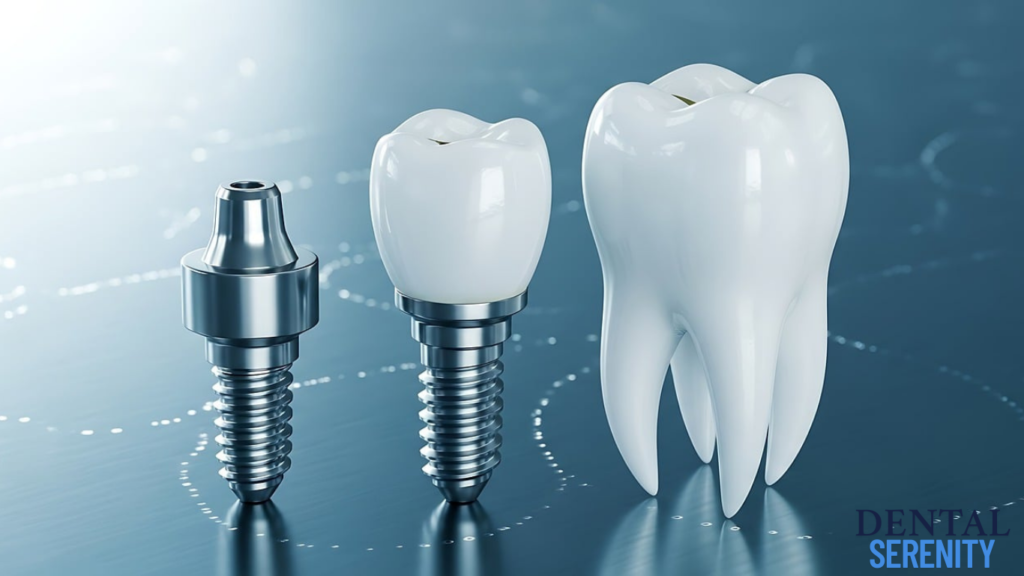
The time for dental implant surgery is just a part of the treatment. You’ll have many visits, healing times, and lab steps. So, the whole dental implant process takes much longer than just the surgery day.
The dental implant process involves planning, healing, and making the final tooth. For many adults, it can take 5–9 months. It can take even longer if grafting is needed. For more on replacing multiple teeth, see this link.
Consultation and imaging appointments
Planning usually takes 1–2 weeks. The dentist checks your medical history and gum health. They also map out your bite and spacing.
Dental X-rays and a 3D scan help measure bone density. This confirms if your jaw can support an implant. This phase gives you a personalized treatment plan. It includes how many implants, where they’ll go, and what kind of crown or denture you’ll get.
Evaluation and preparation: extraction and possible bone grafting
Some mouths need prep work before the implant. This might include extracting a tooth or adding a bone graft. A bone graft is used when the jawbone is too thin or soft.
Bone graft healing can take 3–6 months. This depends on the graft type and how fast your body heals. This step can make the dental implant process longer, even if the surgery itself is short.
Healing (osseointegration) after the implant is placed
After the implant is placed, the body needs time to fuse bone to it. This is called osseointegration. A blood clot forms, and osteoblasts (bone-forming cells) lay down new bone.
Osseointegration usually takes 3–6 months. The lower jaw takes about 3–4 months, while the upper jaw takes 4–6 months. Health, age, bone quality, and implant location all affect how long it takes.
Abutment and final restoration (crown, bridge, or denture)
After integration is confirmed, an abutment is placed. The abutment connects the implant to the crown, bridge, or denture. This might involve a minor procedure to reopen the gum and place a healing collar.
Gum tissue needs about 2–3 weeks to adapt. Then, impressions are taken, and a dental lab makes a custom restoration. The final visit seats the restoration and fine-tunes the bite, completing the dental implant process.
What affects the length of dental implant surgery?
The time needed for dental implant surgery can change for many reasons. These include what the dentist sees on imaging and what needs to be fixed first. Also, how many teeth are being replaced matters.
Even simple surgeries can take longer. This is because of planning, anatomy, and stability needs.
For a quick overview, the dental implant procedure length breakdown shows how healing phases matter as much as chair time.
Bone quality, missing-tooth history, and grafting needs
If the jawbone has lost volume or density, more steps are needed. A bone graft can add about 3–6 months before implant placement. This is because the graft must become strong enough to anchor the post.
Healing speed can vary with bone density, implant location (upper vs. lower jaw), and overall health. Smoking can extend healing by 2+ months and raises failure risk. Poor diabetes control and low vitamin D or calcium intake can also slow bone repair and fusion.
Number of implants and type of restoration
The most practical driver of chair time is simple math. Many offices plan about 1–2 hours per implant. So, adding implants usually raises the dental implant surgery duration in a predictable way.
Restoration choice can affect scheduling, even if the placement time per implant is similar. A single crown often needs fewer fitting visits than a bridge or denture. This is because a bridge or denture may require added lab steps, bite checks, and adjustments that shape the overall calendar around the surgical appointment.
Same-visit extraction and implant placement
In selected cases, an extraction and implant placement can happen in one visit. This may reduce the full timeline without changing the core drilling and placement steps. Some immediate load approaches can also allow a temporary crown the same day, while many traditional plans still wait for healing before the final tooth is attached.
Whether this is possible depends on imaging findings and the ability to achieve strong initial stability. If infection, thin bone, or gum issues are present, the dental implant surgery time estimate may include separate visits so the site can heal first.
Surgical planning and precision tools
Planning often takes 1–2 weeks and may include X-rays or 3D scans, gum assessment, and a detailed bone evaluation. This prep work supports safer positioning and can make the in-chair portion more efficient. This helps manage the length of dental implant surgery.
| Planning or surgical factor | What happens during the visit | How it can affect timing |
|---|---|---|
| 3D imaging and measurements | Bone height, width, and nerve/sinus spacing are mapped before drilling begins | More predictable placement, fewer mid-procedure changes, and a steadier dental implant surgery duration |
| Implant site preparation | A precise channel is created with careful drilling and irrigation to protect bone | Dense bone or tight access can slow steps, increasing the dental implant surgery time estimate |
| Positioning and stabilization | The implant is seated to the planned depth and angle for proper bite and restoration fit | High-precision alignment can add minutes but reduces later adjustment visits |
| Healing cap and sutures | A healing cap may be placed and gum tissue may be stitched when needed | Extra soft-tissue work can extend appointment time, especially in complex cases |
Recovery time, time off work, and what to expect after dental implant surgery hours
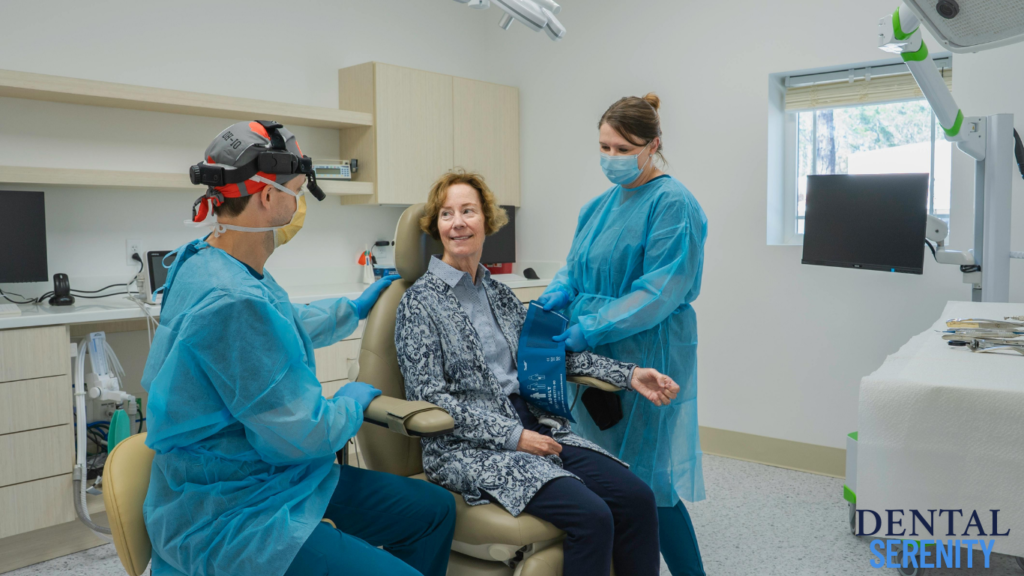
The time in the dental chair is just the start. Recovery has a quick downtime and a longer healing phase. Planning ahead helps match dental implant surgery time with life, like work and family.
Immediate downtime after surgery
Right after surgery, some bleeding or blood-tinged saliva is normal for 24–48 hours. Swelling peaks at 48–72 hours. Discomfort is less intense than a tooth extraction once numbness wears off.
If oral sedation is used, patients may feel drowsy for hours. They should not drive or return to work that day. A trusted adult should help with the trip home, and rest is best while the medication wears off. Knowing about oral sedation recovery helps.
For the first day or two, aftercare is simple but strict:
- Use ice packs in 15-minute intervals during the first 24 hours to limit swelling.
- Take prescribed medication as directed; if approved by the dentist, OTC pain relief like ibuprofen may help.
- Avoid rinsing, spitting, or touching the site early on to lower bleeding risk.
- Rest with the head elevated and keep activity light.
Food choices matter after dental implant surgery. Soft, cool foods are easiest on the gums.
- Choose: yogurt, smoothies without straws, mashed potatoes, soft pasta, scrambled eggs, soft fish, and cool soups or broths.
- Avoid: hard or crunchy foods, chewy foods, spicy or acidic items, very hot drinks, and alcohol.
Symptoms should trend better, not worse. Pain that increases after day 3–5 instead of improving is a common “call the dentist” sign.
Longer healing window and follow-ups
Gum tissue often settles over 4–6 weeks. Many patients notice less redness and swelling by week 2, followed by a healthier pink look by weeks 3–4. This is separate from bone healing, which is slower.
Osseointegration (the bone bonding to the implant) often takes 3–6 months. The lower jaw commonly heals in about 3–4 months, while the upper jaw may take 4–6 months due to softer bone. These months are part of the time needed for dental implant surgery, even though they happen outside the operatory.
Follow-ups are usually brief and scheduled around healing milestones. Timing varies, but many offices also check fit and comfort after restoration work, including a visit about 1–2 weeks after a crown is placed. Work planning depends on the job: desk work often resumes in 1–3 days, while physically demanding jobs may need 5–7 days. Vigorous exercise is often avoided for the first two weeks, with light walking sometimes allowed if cleared.
| Time window | What many patients notice | Practical planning notes |
|---|---|---|
| Days 1–2 | Light bleeding, soreness after numbness fades, swelling starting | Arrange a ride home if sedation is used; plan rest and simple meals |
| Days 2–3 | Swelling often peaks; jaw feels tight | Ice packs in short intervals; keep activity low to reduce bleeding risk |
| Days 4–7 | Tenderness should ease; chewing still limited | Soft-food routine; contact the office if pain increases after day 3–5 |
| Weeks 2–6 | Gums look less inflamed and gradually firm up | Keep follow-up visits; maintain gentle hygiene around the site |
| Months 3–6 | Bone integration continues under the gumline | This longer phase affects the average time of dental implant surgery as a full process, not just the appointment |
Temporary tooth options while healing
Temporary teeth can keep your smile looking natural while the implant heals. Sometimes, a temporary crown is placed the same day. This depends on how stable the implant is.
If not, a removable option is used until the implant is fully integrated. This is when the real work begins.
After the implant is ready, the next steps are planned. This includes the abutment and the final crown or denture. This part takes about 2–3 weeks.
This waiting time is why dental implant surgery hours seem short. But the whole journey is longer.
Conclusion
Dental implant surgery usually takes 1–2 hours per implant. But, the whole process is longer. Healing and follow-up visits can take 5–9 months.
Implants need time to fuse with the bone, a process called osseointegration. This can take 3–6 months. Bone grafting can make it even longer. You can see a detailed timeline on this dental implant timeline.
Many things can affect how long dental implant surgery takes. Bone density and where the implant goes matter a lot. Smoking and diabetes can slow healing, adding months to the process.
Nutrition is key, as vitamin D and calcium help with bone health. The number of implants also affects the time needed. Some patients get a temporary tooth the same day, called immediate load. Others prefer a traditional approach. This overview of how long a dental procedure usually takes explains the typical visit lengths.
After the final crown or denture, keeping it clean is crucial. Brushing, flossing, and regular dental visits are important. Avoiding hard foods and quitting smoking can help the implant last longer. With good care, implants can last 20 years or more, with success rates over 95%.